



EMC Latest

EMC Testing Labs, Equipment & Electromagnetic Compatibility ResourcesEMC Latest

Find accredited EMC testing laboratories and stay informed with the latest electromagnetic compatibility standards and best practices.

Lab directory

Find EMC testing labs

Accredited laboratories worldwide — search by location, test types, industry focus, and accreditations. Compare options and request quotes when you are ready to test.

124

Labs listed

5

Countries

Free

Quote requests

Sister Lakes, Michigan, United States

AHD EMC is an independent EMC testing laboratory located at 92723 Michigan Highway 152 in Sister Lakes, Michigan, operated by Gordon Helm, NCE, P.E. — a NARTE-certified engineer and licensed Professional Engineer with over 50 years of combined EMC design and testing experience. The lab holds NVLAP accreditation for full CE international testing, FCC site approval, and Industry Canada site approval, supporting testing at both 3-meter and 10-meter distances for FCC Parts 15 and 18. Facility infrastructure includes a 3-meter and 10-meter Open Area Test Site (OATS), an indoor conducted emissions shielded room, and power supply capability covering 115V/60Hz/30A, 230V/60Hz/30A, and variable 50–150V or 100–300V at 45–500 Hz up to 1.5 kW. Equipment includes an EMCO antenna (26 MHz–2 GHz), Wavetek signal source (1.1 GHz), HP 8546A EMI receiver (6 GHz), and Solar LISN. All testing carries NIST traceability. Standards supported include FCC Part 15 and 18 (Section 2.948), CE Mark, EN 55022/CISPR 22 (emissions), EN 55011/CISPR 11, CSA Std. C108.8, ANSI C63.4 conducted measurements, shielding effectiveness, and site attenuation. FCC Declaration of Conformity support and computer-aided analysis are also offered.

NVLAPiNARTE
Radiated EmissionsPre-Compliance TestingRadiated Immunity

Knoxville, Tennessee, United States

AMS Corporation is an A2LA-accredited (ISO/IEC 17025, Certificate No. 3483.01) nuclear industry EMC testing and instrumentation and control (I&C) testing organization headquartered at 9119 Cross Park Drive in Knoxville, Tennessee. Founded in 1977 as a spinoff of Oak Ridge National Laboratory (ORNL) and the University of Tennessee, AMS operates a 100,000+ sq ft technology campus staffed by approximately 100 engineers and scientists, the majority of whom are iNARTE-certified EMC Engineers and Specialists. The company's quality assurance program complies with 10 CFR 50 Appendix B and 10 CFR Part 21, and is audited by the Nuclear Procurement Issues Corporation (NUPIC) every two to three years. AMS serves nuclear facilities in 26 countries and maintains 24/7 emergency EMC support availability. EMC services center on the qualification and compatibility of digital I&C equipment and wireless technologies in nuclear power plants, where electromagnetic interference with safety-critical systems presents strict regulatory requirements. Laboratory and on-site field EMC qualification testing is performed to NRC Regulatory Guide 1.180 and EPRI TR-102323 using both MIL-STD and IEC methodologies. Specific capabilities include EMC qualification testing of digital I&C equipment, EMI/RFI troubleshooting and problem resolution, EMI/RFI site surveys of plant electromagnetic environments, wireless technology implementation support, EMC design reviews for equipment upgrades, cable testing, and EMC mitigation and redesign support during qualification. The AMS campus includes MIL-STD-461 testing facilities and a state-of-the-art EMC laboratory, and the company also operates temperature sensor response time and precision calibration laboratories, a materials testing laboratory, and environmental chambers supporting nuclear-grade qualification testing.

A2LAISO/IEC 17025iNARTE
Radiated EmissionsConducted EmissionsRadiated Immunity

San Jose, California, United States

Atlas Compliance & Engineering is an A2LA-accredited (ISO/IEC 17025, Certificate No. 1007-01, ILAC MRA) independent EMC testing laboratory located in San Jose, California, operating since 1997 with over 25 years of regulatory compliance testing experience. The lab specializes in EMC testing for North American, European, Japanese, Korean, and other international markets, and positions itself as an off-site regulatory testing department working seamlessly with client teams from early development through production. Emissions testing capabilities include radiated emissions, conducted emissions, harmonic current, voltage flicker, and pre-scan testing. Markets and standards covered include FCC and ISED Canada (North America), CE Mark (European Union), VCCI (Japan), KCC (Korea), BSMI (Taiwan), and C-Tick (Australia and New Zealand). Immunity testing covers ESD (IEC 61000-4-2), radiated RF fields (IEC 61000-4-3), EFT/burst (IEC 61000-4-4), surge (IEC 61000-4-5), conducted RF (IEC 61000-4-6), magnetic field (IEC 61000-4-8), and voltage dips and variations (IEC 61000-4-11), supporting CE Mark under the EMC Directive and KCC marking requirements. Transmitter certification services are offered for wireless devices, and product safety testing and on-site (in situ) testing are also available. The lab is recognized for providing direct technical assistance and troubleshooting guidance when issues arise during testing, a characteristic noted consistently in client testimonials.

ISO/IEC 17025A2LA
Radiated EmissionsConducted EmissionsRadiated Immunity

Browse labs by US state

Jump straight to accredited labs in your region

Product directory

Find EMC test equipment

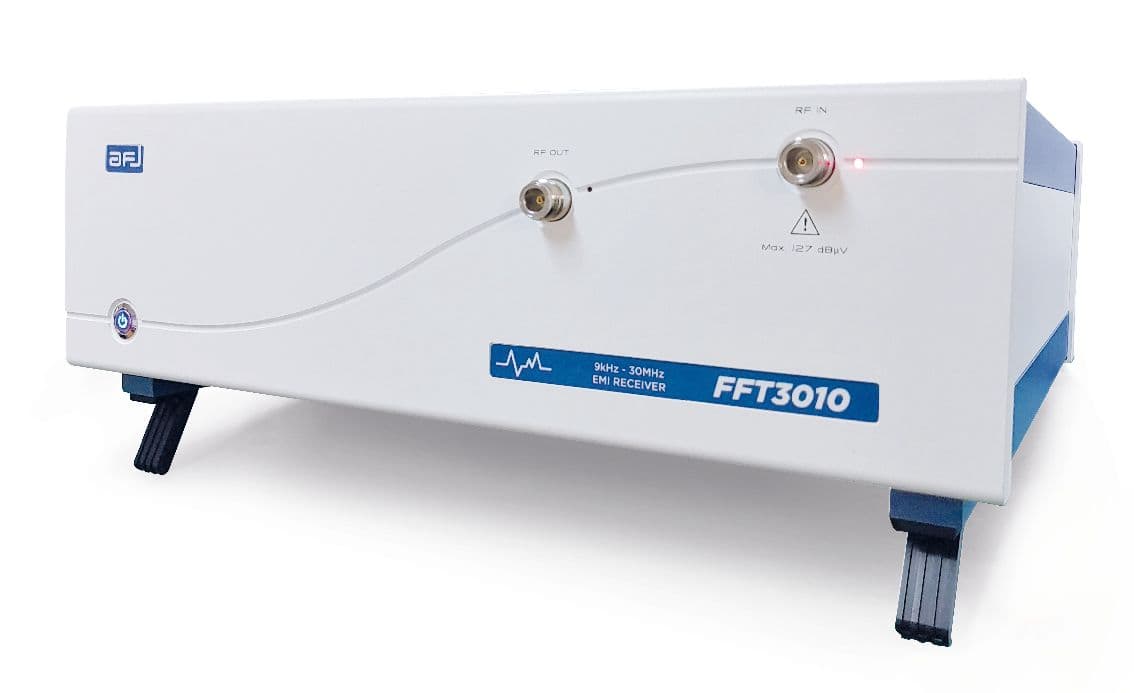
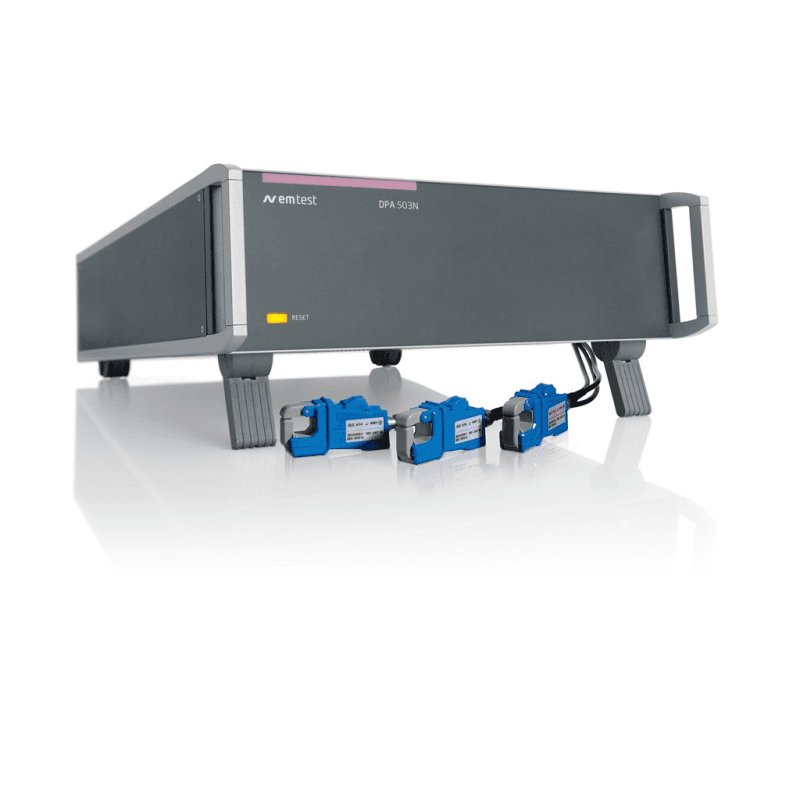
Compare EMI receivers, harmonic and flicker analyzers, and more from leading manufacturers — specs, datasheets, and product pages in one place.

66

Products

16

Manufacturers

1

Categories

Technical resources

EMC whitepapers

Free PDF guides on EMC testing, standards, compliance, and product design from accredited labs and industry leaders.
View all whitepapers
Faster Spectrum Measurements for X-Series Signal Analyzers

Faster Spectrum Measurements for X-Series Signal Analyzers

This Keysight application note details methods for accelerating spectrum measurements using their X-Series signal analyzers (CXA, EXA, MXA, PXA, UXA). The paper focuses on software and hardware optimization techniques to reduce measurement time in automated test environments. Specific optimizations include disabling the display during automation (“DISP:ENAB OFF”), utilizing single sweep mode initiated with “INIT:CONT OFF”, minimizing SCPI transaction count by combining commands, avoiding unnecessary wait statements (*WAI, *OPC?), and reducing mechanical attenuator cycling. The document also highlights newer features like HiSLIP communication protocol for faster data transfer compared to VXI 11.3, as well as software improvements in areas such as EVM measurements (5G NR/Wireless LAN) and alignment procedures (“CAL:EXPIRED?”). Performance gains are illustrated with graphs showing time savings from display disabling, demonstrating potential reductions in overall test duration.

Optimize Power Distribution Networks for Flat Impedance

Optimize Power Distribution Networks for Flat Impedance

This application note from Keysight details a methodology for optimizing Power Distribution Networks (PDNs) to achieve flat impedance across a broad frequency range – crucial for high-speed digital designs like FPGAs. The paper highlights the risks of relying on previous designs or data sheet examples, advocating instead for pre-layout simulation and analysis. It explains how parallel resonance between inductance and capacitance leads to potentially damaging “rogue waves” on the power rail. Using an example targeting 12mΩ impedance for a 5A/60mV FPGA application (Figure 1), it demonstrates how selecting appropriate decoupling capacitors based on system parasitics, rather than generic recommendations, is vital. The core equation provided, C = L / Z<sup>2</sup>, allows for targeted capacitor selection to achieve flat impedance and minimize part count. A complete workflow incorporating pre-layout simulation, post-layout EM analysis, and measurement is recommended to ensure power integrity and reduce EMI/EMC failures.

Why Multi-Interference Testing Matters for Modern Medical Devices

Why Multi-Interference Testing Matters for Modern Medical Devices

This application note details the importance of multi-interference testing for modern medical devices operating in increasingly congested RF environments like hospitals. Traditional EMC testing is insufficient; wireless coexistence testing—guided by ANSI C63.27—is vital for ensuring patient safety and device reliability. The paper outlines a risk-based, tiered evaluation approach (Tier 1-3) dependent on the severity of potential FWP (Functional Wireless Performance) failures, utilizing KPIs such as throughput, latency, and packet error rate. Testing is demonstrated using Keysight’s Wireless Coexistence Test Solution, which allows for generation of up to eight concurrent interferers across multiple standards including Wi-Fi, Bluetooth, and LTE, highlighting a case study where it identified a data throughput drop from 20 Mbps to 3.9 Mbps in a 5 GHz Wi-Fi infusion pump due to interference.